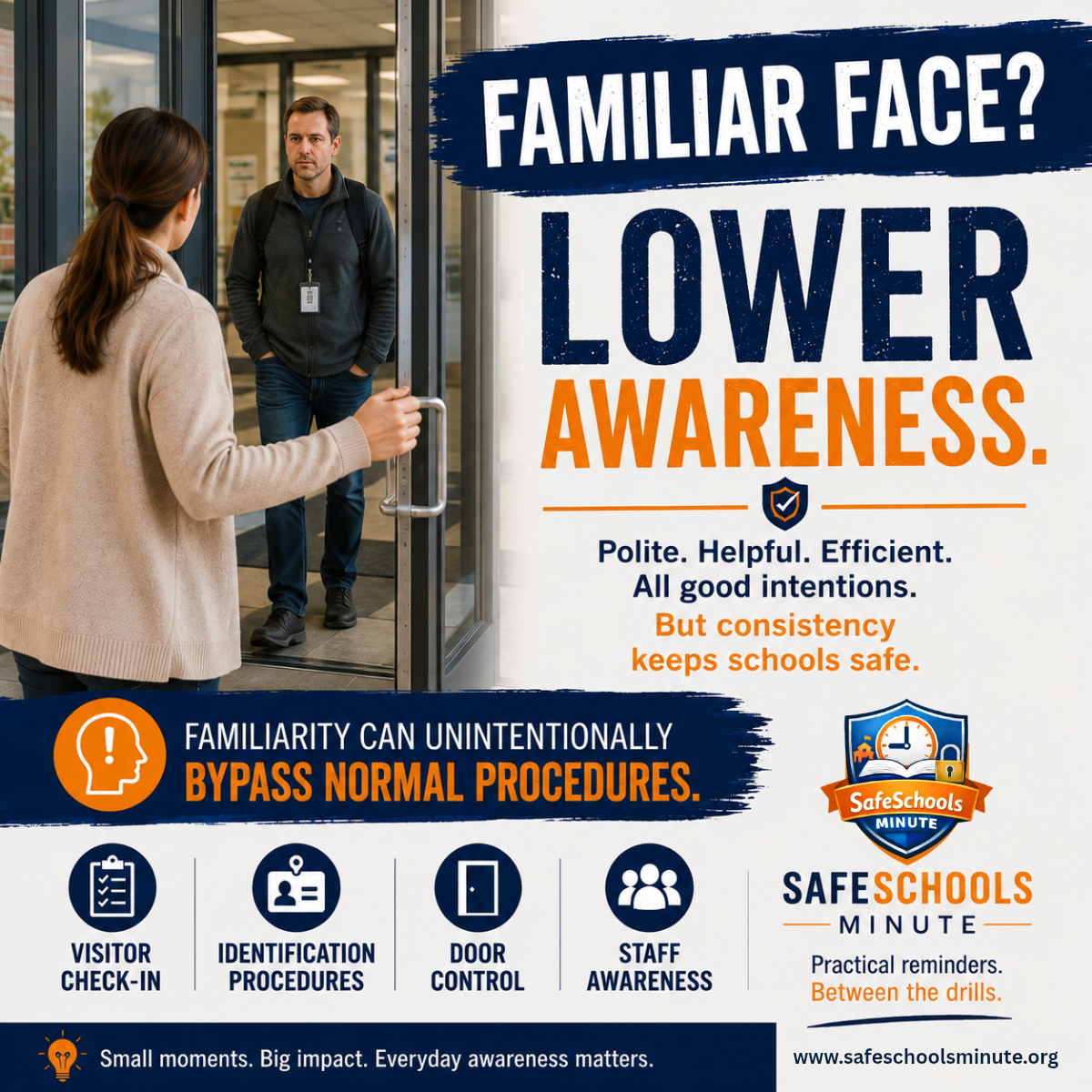
Familiar Face Bias:
“They Look Like They Belong” Becomes a Risk
In schools, staff become very good at recognizing routines, students, parents, and familiar activity throughout the day.
That familiarity helps schools operate smoothly.
But sometimes, familiarity can also create blind spots.
This is known as Familiar Face Bias.
It happens when someone is assumed to belong simply because they look comfortable in the environment, have been seen before, or appear familiar enough not to question.
In many cases, no one intentionally ignores a concern.
The brain simply fills in the gaps and assumes everything is normal.
What Familiar Face Bias Looks Like in Schools
This can happen in simple everyday moments:
A person follows a group into the building and no one questions it
Someone is seen in the hallway repeatedly, so staff assume they are authorized
A visitor is recognized from a previous event and bypasses normal procedures
A person “looks like a parent” or “looks like staff” and is left unchallenged
None of these situations automatically mean danger.
The issue is the assumption.
Why It Matters
Most schools already have procedures for visitors, sign-ins, and access control.
The challenge is consistency.
When staff become overly comfortable with familiar routines, it becomes easier to overlook things that deserve a second look.
School safety is rarely about dramatic moments.
More often, it is about recognizing small inconsistencies before they become larger problems.
Awareness Without Confrontation
Addressing Familiar Face Bias does not mean staff should become confrontational or suspicious of everyone.
It means maintaining professional awareness.
Simple actions can make a major difference:
Politely greeting unfamiliar individuals
Asking if someone needs assistance
Verifying badges or visitor procedures consistently
Reporting concerns early instead of assuming someone else already checked
Often, a calm and professional interaction is enough to clarify a situation immediately.
Building a Culture of Consistency
One of the strongest school safety habits is consistency.
When procedures are followed the same way for everyone, staff rely less on assumptions and more on established expectations.
That consistency protects:
students
staff
visitors
the overall school environment
It also creates a culture where awareness becomes normal, not awkward.
Closing Thought
People who do not belong in a school environment often rely on blending in, avoiding attention, or appearing familiar enough not to be questioned.
That is why awareness matters.
Not every concern becomes a problem.
But every problem usually begins with something that was overlooked.
Safe schools are built when staff remain aware, consistent, and willing to notice the small things.
SafeSchools Minute™ supports staff awareness by reinforcing practical school safety habits through short, structured weekly reminders that fit into everyday routines.