
This Week’s SafeSchools Minute
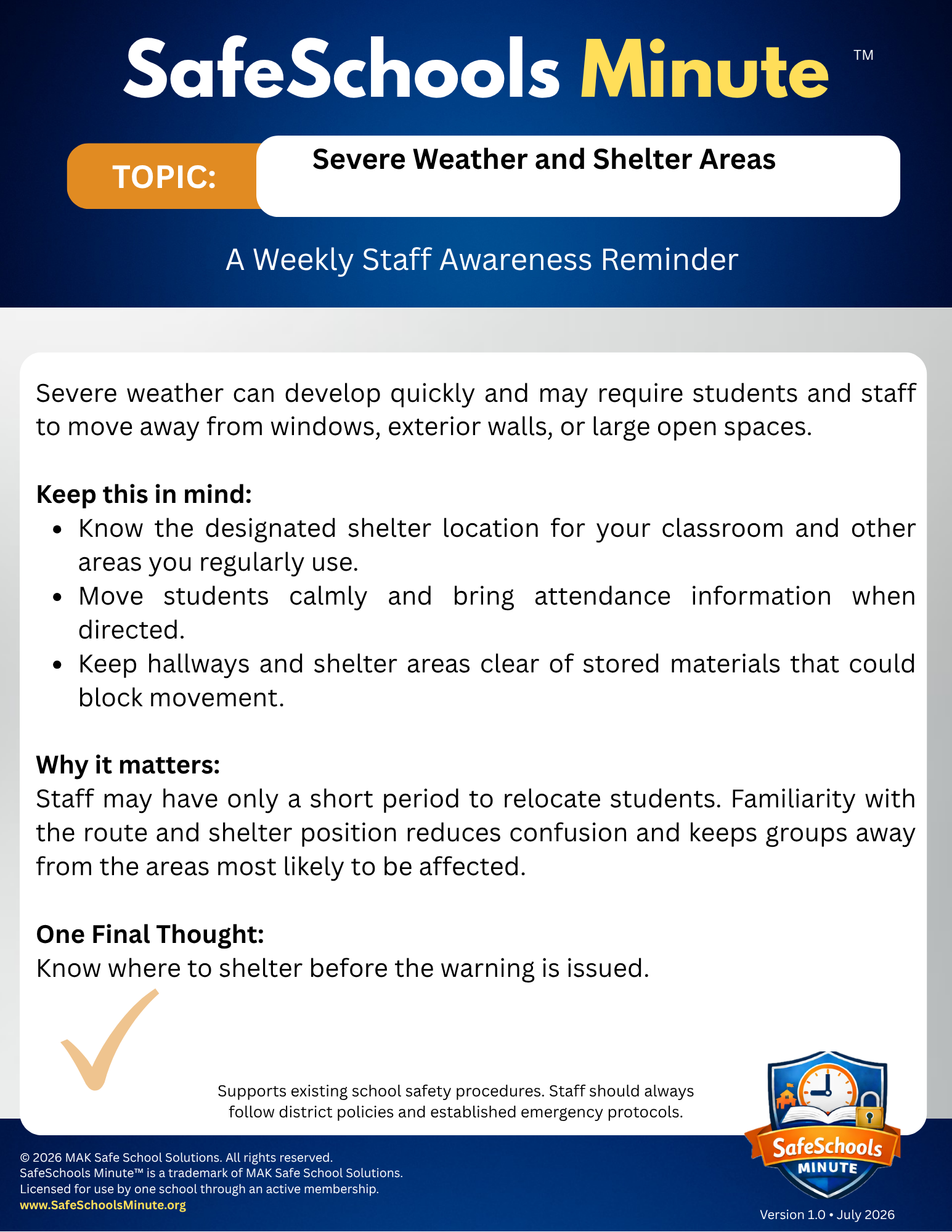
Severe Weather and Shelter Areas
Part of the Guided Weekly School Safety Program
How to Use This Week’s Reminder
Share this week's SafeSchools Minute with your staff through your school's usual communication channels.
Use the Ready-to-Send Email below to quickly copy and paste a message into your email, then attach the Reminder PDF before sending.
Each reminder takes about one minute to read and reinforces an important everyday school safety habit..
Included with this Reminder
-
Subject: This Week’s Safety Reminder: Severe Weather and Shelter Areas
Staff,
This week’s SafeSchools Minute™ focuses on Severe Weather and Shelter Areas.
Severe weather may require us to move quickly to designated shelter locations. Those areas may be different from the locations used during other emergency procedures.
Please make sure you know the severe weather shelter area assigned to your classroom or work location and the safest route to reach it.
This week, take a few moments to review that route and confirm that the shelter area is accessible, clear of unnecessary storage, and ready for use.
Please take one minute to review the attached reminder.
Know your shelter location before the warning is issued.
Thank you for helping us stay prepared for severe weather before it happens.
-
Severe weather can require staff and students to move quickly to a designated shelter area.
The safest location may be different from the area used for a fire evacuation or lockdown. Staff should know the school’s assigned severe weather shelter locations and the safest route to reach them.
In general, shelter areas should keep students away from windows, exterior walls, large open spaces, and other areas that may provide less protection.
The most important step is knowing where to go before the warning is issued.
Severe weather response should be planned before the storm arrives.
-
Where is your assigned severe weather shelter area, and what route would you use to get there?
Suggested response:
Staff should know:
• The designated shelter area for their classroom or work location
• The safest route to reach it
• Where students should position themselves once there
• How attendance will be taken
• How updates or the all clear will be communicated
• What alternate location to use if the normal shelter area is unavailable -
Pay particular attention to:
• Staff who are unsure of their assigned shelter area
• Routes that may be blocked by furniture or stored materials
• Students positioned too close to windows or exterior walls
• Large open spaces that should not be used as shelter areas
• Areas where severe weather directions are unclear or outdated
• Substitute or coverage staff who may not know where to go
• Shelter areas that have become crowded with stored itemsShelter areas should remain easy to access and ready for use.
-
Take a few minutes this week to review the severe weather shelter location for your classroom or regular work area.
Ask yourself:
• Do I know exactly where to go?
• Is the route clear?
• Where would I position my students once there?
• How would I account for everyone?
• What would I do if the normal route or shelter area were unavailable?Know your shelter location before the warning is issued.