This Week’s SafeSchools Minute
Medical Emergencies in the Classroom
Part of the Guided Weekly School Safety Program
How to Use This Week’s Reminder
Share this week's SafeSchools Minute with your staff through your school's usual communication channels.
Use the Ready-to-Send Email below to quickly copy and paste a message into your email, then attach the Reminder PDF before sending.
Each reminder takes about one minute to read and reinforces an important everyday school safety habit.
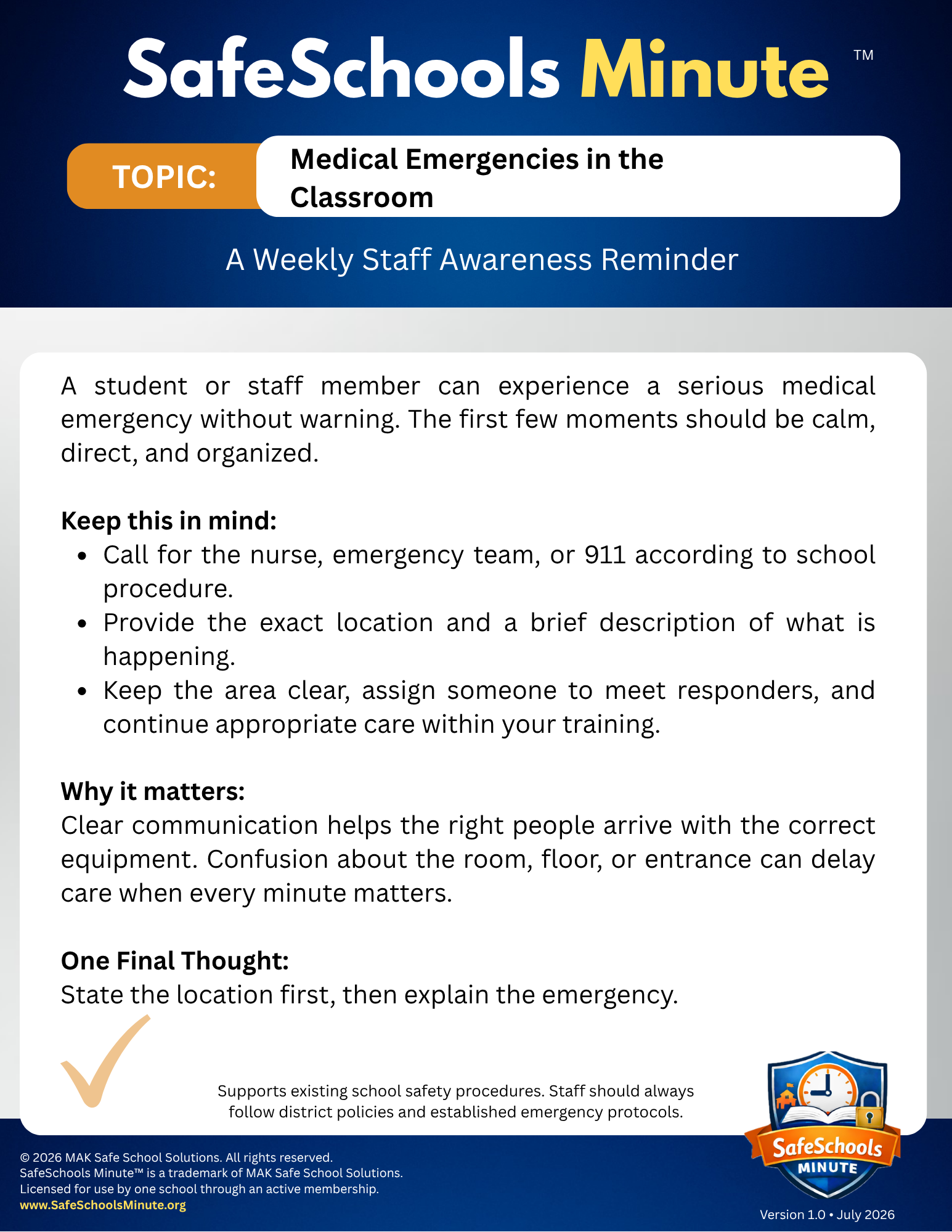
Included with this Reminder
-
Subject: This Week’s Safety Reminder: Medical Emergencies in the Classroom
Staff,
This week’s SafeSchools Minute™ focuses on Medical Emergencies in the Classroom.
Medical emergencies can happen quickly, and clear communication in the first few moments can make an important difference.
If an emergency occurs, follow our established procedures for contacting the nurse, main office, or emergency services. Be prepared to provide the exact location and a brief description of what is happening.
Whenever possible, keep the area clear, maintain supervision of other students, and make sure responders can reach the individual without unnecessary delay.
This week, take a moment to think through how you would call for help from your classroom or regular work area and where the nearest AED and emergency supplies are located.
Please take one minute to review the attached reminder.
Know how to call for help before you need it.
Thank you for helping us stay prepared to respond quickly and calmly to a medical emergency.
-
Medical emergencies can happen quickly, and the first few moments matter.
Staff should know how to summon help, clearly communicate the exact location, and provide a brief description of what is happening. Whenever possible, one person should remain with the individual while another contacts the office, nurse, or emergency services according to school procedure.
Avoid crowding the area. Keep other students calm and create space for responders to enter.
The goal is not for every staff member to diagnose the problem. The priority is to recognize that help is needed, communicate clearly, and follow the school’s emergency response procedures.
-
What information should be communicated first when reporting a medical emergency?
Suggested response:
Provide:
• The exact location
• Who needs help
• A brief description of what is happening
• Whether the person is conscious and breathing, if known
• Any immediate danger in the area
• The best entrance or route for responders, if applicableClear information helps the right people respond quickly.
-
Pay particular attention to:
• Whether staff know how to contact the nurse or main office
• Whether classroom phones, radios, or emergency communication methods are working
• Whether room numbers and locations are clearly identified
• Whether access routes are clear for emergency responders
• Whether staff know the location of the nearest AED and first aid supplies
• Situations where too many people gather around an emergency
• Students who may require additional assistance during a medical eventPreparation should happen before an emergency occurs.
-
Take one minute this week to mentally walk through what you would do if a medical emergency occurred in your classroom or work area.
Ask yourself:
• How would I call for help?
• What exact location would I provide?
• Where is the nearest AED?
• Who could meet and direct responders?
• How would I keep the rest of the students calm and supervised?Know how to call for help before you need it.